
Une nouvelle frontière pour l’impression 3D
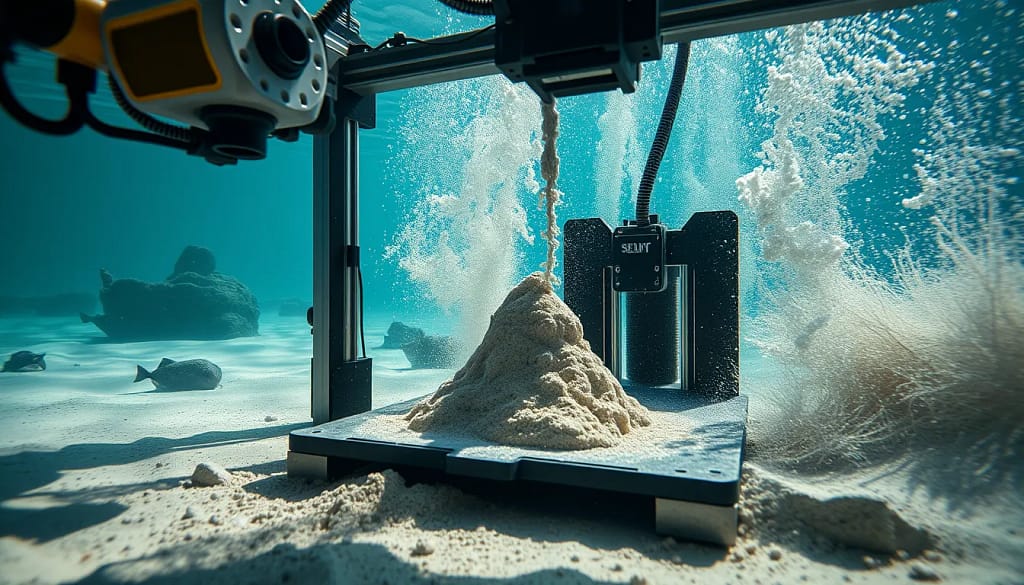
L’impression 3D a longtemps été confinée aux environnements terrestres, mais une nouvelle avancée dans la construction sous-marine promet de transformer cette technologie. Des équipes en Norvège testent actuellement des techniques innovantes pour imprimer des structures directement sous l’eau, ouvrant de nouvelles possibilités dans la construction durable et les projets d’infrastructure marine.
Les premiers essais concrets en Norvège
En collaboration avec plusieurs universités et entreprises technologiques, la Norvège a débuté des essais de construction sous-marine en utilisant des matériaux spécialement formulés pour l’environnement aquatique. Cela permet de réduire le besoin de transporter des matériaux lourds et coûteux sur place, diminuant ainsi l’empreinte carbone des projets maritimes.
Matériaux adaptés et techniques de pointe
Les matériaux ingénieux utilisés incluent des composites à base de sable et de liants naturels capables de durcir rapidement même sous l’eau. Grâce à des imprimantes 3D sous-marines robotisées, les structures peuvent être construites en couches précises, assurant une solidité et une stabilité optimales.
Implications pour l’infrastructure marine
Cette innovation n’est pas seulement un exploit technique; elle représente une avancée majeure pour l’infrastructure marine mondiale. Les projets d’énergie renouvelable, tels que les parcs éoliens offshore, peuvent bénéficier de ces technologies d’impression 3D, réduisant les coûts et les délais de construction.
- Construction de barrières artificielles pour habitat marin
- Installation de plates-formes pétrolières et gazières plus respectueuses de l’environnement
- Réparation rapide des structures sous-marines existantes
Vers un déploiement mondial?
Avec le succès des essais norvégiens, d’autres nations côtières envisagent d’adopter ces techniques de construction novatrices. Un déploiement à grande échelle pourrait voir le jour d’ici la fin de la décennie, transformant radicalement notre approche des projets maritimes et augmentant notre capacité à protéger les écosystèmes fragiles.
Conclusion
L’impression 3D sous-marine pourrait bien marquer une étape décisive dans le secteur de la construction, offrant des solutions écologiques et économiques pour les défis marins du XXIème siècle. À mesure que la technologie évolue, elle pourrait devenir un pilier essentiel de l’infrastructure mondiale.
English version
Underwater 3D Printing Revolutionizes Construction
A New Frontier for 3D Printing
3D printing has long been confined to terrestrial environments, but a new breakthrough in underwater construction promises to transform this technology. Teams in Norway are currently testing innovative techniques to print structures directly underwater, opening new possibilities in sustainable construction and marine infrastructure projects.
First Concrete Trials in Norway
In collaboration with several universities and tech companies, Norway has begun underwater construction trials using materials specially formulated for the aquatic environment. This reduces the need to transport heavy and expensive materials on-site, thereby decreasing the carbon footprint of maritime projects.
Adapted Materials and Cutting-edge Techniques
The ingenious materials used include sand-based composites and natural binders capable of rapidly hardening even underwater. Thanks to robotic underwater 3D printers, structures can be built in precise layers, ensuring optimal strength and stability.
Implications for Marine Infrastructure
This innovation is not just a technical feat; it represents a major breakthrough for global marine infrastructure. Renewable energy projects, like offshore wind farms, can benefit from these 3D printing technologies, reducing costs and construction times.
- Construction of artificial barriers for marine habitat
- Installation of more environmentally friendly oil and gas platforms
- Rapid repair of existing underwater structures
Toward Global Deployment?
With the success of the Norwegian trials, other coastal nations are considering adopting these innovative construction techniques. A large-scale deployment could emerge by the end of the decade, radically transforming our approach to maritime projects and enhancing our ability to protect fragile ecosystems.
Conclusion
Underwater 3D printing might well mark a decisive step in the construction sector, offering ecological and economical solutions for the 21st-century marine challenges. As technology evolves, it could become an essential pillar of global infrastructure.
Contactez-nous pour votre projet
Pour tous vos travaux professionnels de construction et de rénovation, faites appel à notre équipe : nous établissons un devis gratuit et personnalisé.
- 📞 Téléphone : 07 49 44 55 56
- ✉️ Email : contact@nikonov.fr
- 🌐 Site web : www.nikonov.fr
Contact us for your project
For all your professional construction and renovation works, contact our team for a free personalised quote.
- 📞 Phone: +33 7 49 44 55 56
- ✉️ Email: contact@nikonov.fr
- 🌐 Website: www.nikonov.fr